
On the network and server side, one of the fastest-degrading areas is the truth of the inventory. If IP blocks live in a separate Excel file, rack layout in another wiki page, VLAN data in ticket history, and device roles only in the memory of a few people, then automation has no reliable data foundation. NetBox should be regarded not just as an IPAM tool but as the central data model of infrastructure reality if you want to solve this problem.
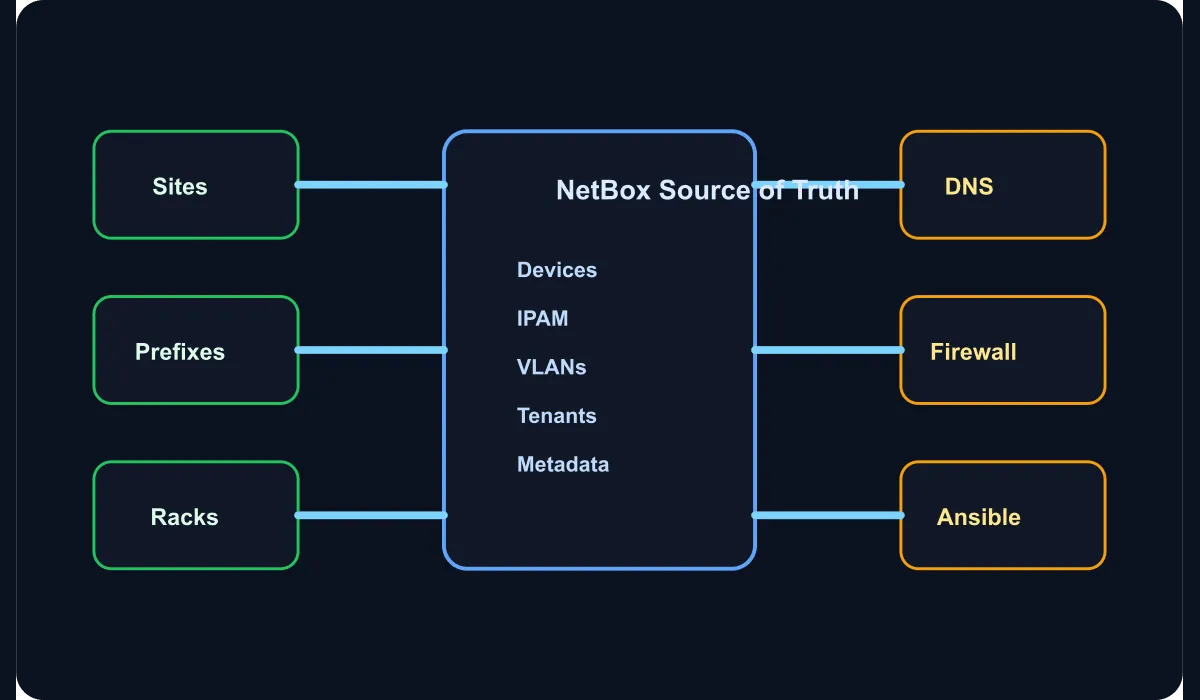
Why the data model first?
Many teams want to start with Ansible or Terraform. But if the source of truth is scattered, automation only multiplies incorrect information faster. The first win on the NetBox side is defining objects like devices, prefixes, VLANs, sites, and tenants in a common language.
Thanks to this definition, the following questions can be answered automatically:
- Which location does this subnet belong to?
- Which device holds which role?
- Where is the next free IP range?
- Which critical systems live inside a particular rack?
What does a minimum viable setup look like?
In the early phase, keeping the data model simple is more accurate than trying to fill in every detail. The starter set I recommend includes the following objects:
- Site
- Device role
- Device type
- Prefix
- VLAN
- IP address
- Rack
Even these objects, when operated properly, dramatically clarify both network operations and the server provisioning flow.
Which fields are critical for automation?
Just having data entered into NetBox is not enough. For automation to trust it, certain fields must be made mandatory:
- Owning team information
- Environment class (
production,test,lab) - Location or data center
- Device role
- Service criticality
Which processes can NetBox feed?
With the right data model, NetBox can feed the following flows:
- IP assignment for new servers
- Firewall object generation
- DNS record creation
- Rack capacity visibility
- Basic CMDB-like inventory reports
Especially when IPAM is combined with the DNS and firewall flow, the manual ticket load on the network side drops significantly.
How should API usage be planned?
NetBox’s real value emerges at the API layer. A common pattern on the automation side looks like this:
- The requested site, role, and environment information is gathered.
- The matching prefix pool is queried over the API.
- The first available IP is reserved.
- Device objects and interface relationships are created.
- The output is fed into the Ansible or Terraform flow.
This way, problems like overlapping IPs caused by human error, forgotten VLANs, or missing inventory records decrease.
What happens if process discipline is missing?
The biggest risk is that NetBox gradually turns from a reference system into a lagging report system. To prevent this:
- NetBox updates should be a closing criterion in change flows
- Wherever possible, record creation should happen via the API
- Run regular drift reports
- Limit manually opened exception records
Conclusion
IPAM and inventory automation with NetBox looks like a discipline of data entry on the surface, but in reality it lays the trustworthy foundation for all of your infrastructure automation. For teams who want to make network, server, and data center operations more systematic, the right starting point is often not a new tool but a single accurate inventory model.