
In most teams, technical debt lives between two flawed extremes. At one end, debt is constantly complained about but never makes it onto the roadmap. At the other end, every quality issue triggers a “let’s clean this up first” reaction that paralyzes the delivery calendar. In senior engineering practice, the value-creating approach is to move technical debt out of the emotional grievance corner and reframe it as a negotiable engineering subject.
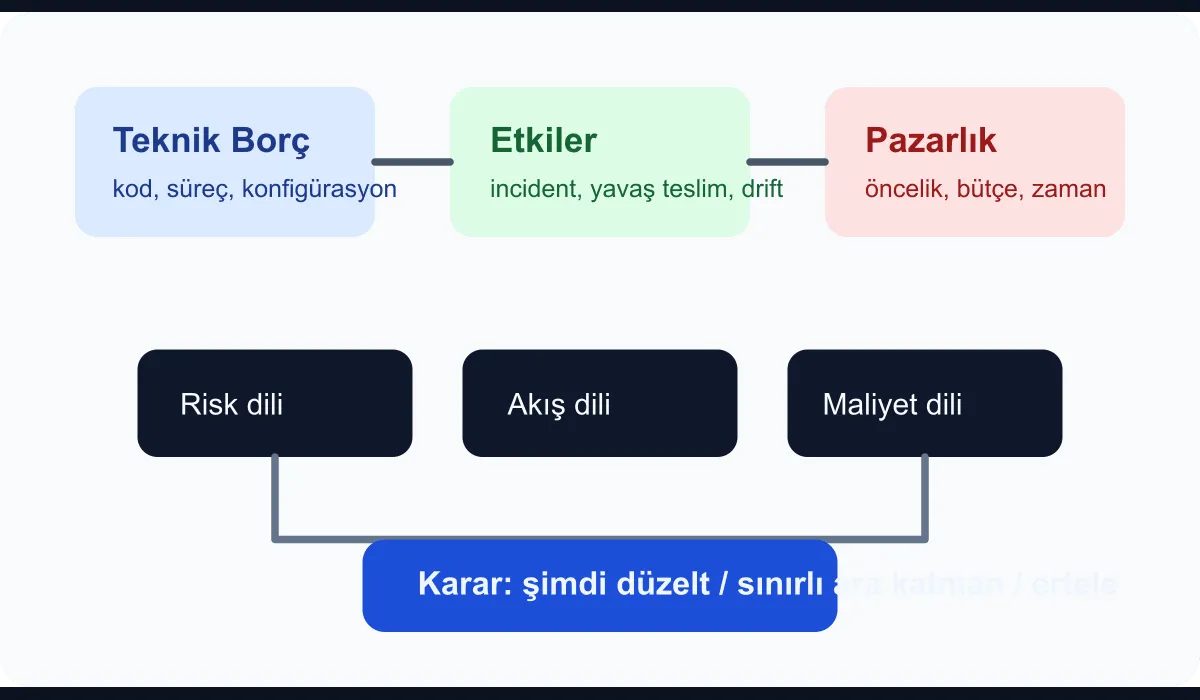
Why does technical debt have to be a negotiation topic?
Because in enterprise teams resources are limited and not everything can happen simultaneously. The real impact of technical debt usually touches one of these areas:
- It slows down delivery velocity
- It raises the likelihood of incidents
- It increases change risk
- It lengthens onboarding time
- It quietly inflates platform cost
But when these effects are described in abstract sentences, they don’t turn into business decisions. Saying “this code is bad” is weaker than saying “this service creates a two-team dependency on every change.” The negotiation framework starts exactly here.
What language should you use when discussing debt?
I find a three-language model useful:
- The risk language
- The flow language
- The cost language
The risk language describes possible outage or security impact. The flow language makes delivery time and team waiting points visible. The cost language puts excess infrastructure, operational burden, or rework price on the table. When a senior engineer can describe the same problem in whichever of these three languages fits, they establish common ground with decision makers.
For example, “the monolithic deployment pipeline is complex” is a weak sentence. Instead, “our rollback time has stretched to forty minutes, so change windows are shrinking” produces a decision.
Not every piece of technical debt has the same weight
The most common mistake is presenting all debt as equally urgent. This approach quickly erodes trust. A more solid model is to split debt into the following groups:
- Outage debt: Debt that grows incident probability or blast radius
- Flow debt: Debt that reduces team delivery speed
- Compliance debt: Debt that creates audit, security, or regulatory risk
- Platform debt: Debt that produces repetitive manual work and operating overhead
This classification makes it more transparent which item in the same backlog stands out and why.
What do you bring to the negotiation table?
Not just intuition, but small but persuasive pieces of evidence. The starter set I find useful:
- The same defect pattern observed across the last three changes
- Average lead time or rollback duration
- Runbook dependency or an operational step tied to a single person
- The disconnect between alert volume and the actual root cause
- The learning curve for new team members
These data points don’t have to be perfect. But they push the negotiation from “we feel it” to “we see a pattern.”
When does technical debt need a full fix versus a bridge layer?
This is one of the places where senior engineering really makes a difference. Not every problem requires a full rewrite. Sometimes the most accurate move is to build a temporary but controlled bridge layer:
- An idempotent retry layer for a fragile integration
- A common schema enrichment layer for scattered logs
- A short-lived authorization corridor for a weak access model
- A narrowed change contract for a chaotic release process
These intermediate solutions should be used not to deny the debt, but to buy safe time for a larger transformation.
Why does the mentoring dimension matter?
Because junior engineers often either fail to see technical debt at all or, once they see it, treat everything as urgent. The senior engineer sets the example here. How you describe the debt, what you measure, and what you accept for now sets a standard inside the team.
Mentoring becomes visible through these behaviors:
- Writing the debt item alongside its business impact
- Asking the “future operating cost” question in design discussions
- Framing refactor proposals without disconnecting them from the delivery plan
- Making the “we won’t fix it now” decision with a justification too
This discipline carries technical maturity from individual intuition into team practice.
Conclusion
For senior engineers, the technical debt negotiation framework is not about complaining louder; it is about establishing a more accurate decision surface. When you make technical debt visible in the language of risk, flow, and cost, you can strike more realistic agreements with the product, platform, and management layers. Good senior engineering is partly this: being able to translate every technical truth into the right non-technical language.